As the number of Bundibugyo Ebola cases in the Democratic Republic of Congo (DRC) pushes past 1,000, doctors continue to fight the disease without a vaccine or cure. But the country’s top Ebola scientist tells SciDev.Ne…
The story
The Independent July 6, 2026 AFRICA, Health, In The Magazine Leave a comment
As the number of Bundibugyo Ebola cases in the Democratic Republic of Congo (DRC) pushes past 1,000, doctors continue to fight the disease without a vaccine or cure. But the country’s top Ebola scientist tells SciDev.Net “there is still hope for this epidemic”. The outbreak detected in early May has spread rapidly across the provinces of Ituri, North Kivu and South Kivu in Eastern DRC, and into neighbouring Uganda, with fears that it could cross to South Sudan.
Details
Unlike the Zaire strain, for which a vaccine and treatment already exist, no licensed vaccine or curative treatment is currently available for the Bundibugyo species of Ebola identified in the current outbreak. The development of a new vaccine is expected to take several months. As of 25 June, the toll in the DRC stood at more than 1,200 confirmed cases and 321 deaths, while in Uganda there have been 20 confirmed cases and two deaths.
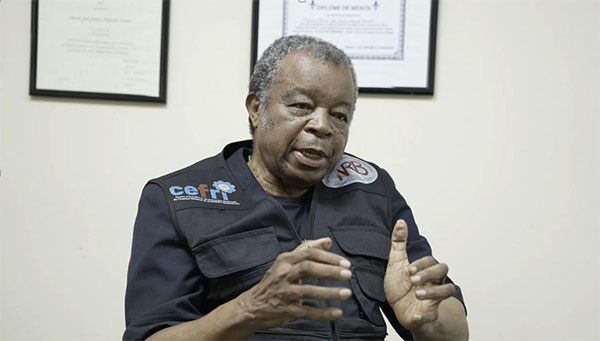
SciDev.Net spoke with Jean-Jacques Muyembe, director general of the DRC’s National Institute of Biomedical Research (INRB) and co-discoverer of the Ebola virus in 1976, to find out what is known about the virus and the progress being made towards a workable treatment.
What do we know to date about the Bundibugyo strain of the Ebola virus?
This is a strain that was first discovered in 2007 in Uganda and caused a major outbreak in the DRC in 2012 in Isiro. So, it’s a virus we know; perhaps not very well, but we know it and we have to deal with it now.
So, the key characteristic of the Bundibugyo virus is that it causes a less severe illness than the Zaire strain of Ebola. Consequently, healthcare workers had considerable difficulty identifying this disease as haemorrhagic fever because the bleeding symptoms were subtle. This led to a significant delay in detecting the epidemic.
The other characteristic is that this strain is not as virulent as Zaire Ebola. The fatality rate is around 30 to 40 per cent. This is less lethal than the Ebola Zaire virus.
Why it matters
This is a public-interest story for Uganda because it touches institutions, communities, policy decisions, or services that affect daily life. Mods99 News will continue updating the article if more verified details become available.